Sourced fact
The News
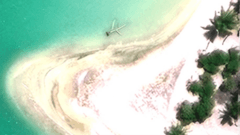
A research team from the University of Hawaii at Manoa confirmed that the object previously thought to be debris from Amelia Earhart's aircraft in 2020 is actually decomposed trees on Nikumaroro Island. The team visited a site near Tarawa Lagoon on Nikumaroro Island in Kiribati to verify if the object spotted in satellite imagery was remnants of Earhart's Lockheed Electra. However, the university stated that the object "appears to be a group of large trees deposited on the beach in the lagoon." When the team arrived at the site, most of the debris had disintegrated and was submerged, leaving only a Y-shaped fragment.
Project leader Richard Pettigrew said, "This mystery has been ongoing for 90 years, and it continues." He added, "The island holds its secrets and will continue to do so. I believe someone will eventually find conclusive evidence here."
In 1937, Earhart's aircraft vanished without a trace during her attempt to circumnavigate the globe. She had successfully flown from California through South America and Africa to Asia in her twin-engine Lockheed Electra when she arrived at Lae, Papua New Guinea. Earhart and her navigator, Fred Noonan, planned to travel towards Hawaii before returning to California. However, their aircraft disappeared while attempting to reach Howland Island, an uninhabited island approximately 400 miles (644 km) from Nikumaroro to refuel.
Analysis & context
Analysis & Context
From an analytical perspective, the search for Amelia Earhart continues a decades-long effort to uncover the fate of the famous pilot. These efforts have included examining numerous potential sites in the Pacific Ocean, including Nikumaroro Island.
In a broader context, this case illustrates how historical mysteries can continue to captivate global interest over the years. The ongoing search for Amelia Earhart demonstrates how the pursuit of truth and the revelation of historical secrets can be a compelling and popular topic among the public.
It is also noteworthy that Nikumaroro Island, located in the Pacific, may be a significant site in aviation history and archaeological research. Researchers may continue to explore the island to find additional evidence regarding Earhart's fate.