Sourced fact
The News
Jensen Huang's reinstatement as CEO of Nvidia has caused a global shockwave, topping the trending topics list on the Chinese platform Weibo. Chinese users reacted with great joy to the return of this influential billionaire who had previously declared his love for his country, while some questioned why he did not wear his signature leather jacket in his return-to-office video.
It appears that Chinese President Xi Jinping welcomes this return, which many have described as one of the biggest sudden reversals ever, thereby bolstering China's sense of victory in the espionage scandal that had sparked controversy. Chinese state media refuted claims that two women linked to Huang were recruited by China's Ministry of State Security, describing the narrative as a smear campaign orchestrated by hardliners in Washington.
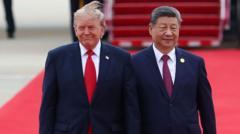
The White House and President Donald Trump also confirmed that Huang poses no threat to US national security, despite ongoing investigations into espionage allegations. China has drawn important lessons from this crisis, particularly regarding Trump's pressure on sensitive points; the swift timing of Huang's reinstatement following Xi's meeting with Trump in Shenzhen suggests that direct dialogue is an effective means of influencing Washington.
The current situation indicates two camps in Washington: one supporting the imposition of technical restrictions to protect US national security, while the other, represented by figures like Huang, believes these restrictions will not curb Beijing's ambitions. Despite Huang's return to leadership, the sale of advanced chips remains a major point of contention between the two countries, especially with attempts to reach a trade deal ahead of an expected December meeting.
The United States is taking new measures through its Industry and Security Office targeting the export of advanced chips directly to China, as well as prohibiting Chinese companies from using computing power in foreign data centers to address potential vulnerabilities. This has raised investor concerns about any escalation that could affect US stock markets, while Xi sees Trump's willingness to protect financial markets as a strategic leverage point.
Experts fear that restricting chip exports could trigger a Chinese retaliation using its monopoly on rare earth metals, potentially sparking a spiral that negatively impacts stock markets since American companies rely on these resources. The coming months will see increased political pressure with Huang's testimony before Congress next month; Senator Tom Cotton has stated that this dispute is merely the tip of the iceberg and remains ongoing despite Huang returning to his role.
Analysis & context
Analysis & Context
From an analytical perspective, Huang's return reinforces the view of Chinese officials that there are two camps in Washington: those who support restricting Chinese access to advanced technology to protect US national security, and those like Huang who believe these restrictions will not curb Beijing's ambitions. China has realized that Trump is so concerned about the stock market that he is willing to intervene in HR decisions at the world's largest company, giving Beijing a new lever in trade negotiations.
In the broader context, American companies ranging from automakers to defense firms and chip manufacturers rely heavily on rare earth metals controlled largely by China. If Washington restricts chip exports and Beijing retaliates, it could initiate a cycle with profound effects on US stock markets, as these metals are vital for both parties' military and economic production operations.
Strategic relations between the two countries face new challenges where tariffs are no longer the core of the conflict but rather control over critical technology and metals that can in turn affect each side's military influence and economic power. However, the future of this dynamic depends on how the Huang issue evolves, as he will testify before Congress next month while the Democratic-controlled Congress increases pressure in January.
Finally, Senator Tom Cotton's statements indicate that the Nvidia scandal is merely the tip of the iceberg and not resolved even after Huang returns to his job, suggesting that tensions may persist and escalate as investigations continue and upcoming elections approach.