Sourced fact
The News
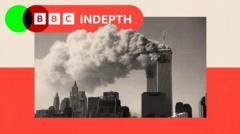
The terrorist attack on the United States on September 11, 2001, which resulted in the deaths of 2,977 people, was a catastrophic intelligence failure attributed to a lack of imagination and management within the American intelligence community at that time. A report by the 9/11 Commission concluded that the Central Intelligence Agency (CIA) and the Federal Bureau of Investigation failed to properly assess and share information to prevent the disaster.
In the aftermath of the attacks, President George W. Bush declared a war on terror, leading to a radical restructuring of Western intelligence services to enhance cooperation among the eighteen American agencies and allied countries such as Britain, Canada, and Australia. Regional fusion centers were merged in the United Kingdom to create a high-security Counter-Terrorism Operations Center in London, where intelligence officers and police officers sit together to take executive action.
Despite these improvements, subsequent years saw major intelligence failures, such as the 2003 Iraq War, which was built on misleading information about weapons of mass destruction in Iraq that had actually been destroyed after the first Gulf War. Sir Richard Shirreff, a former military commander in Iraq, stated that the war was based on flawed information and that leadership clearly recognized it was heading toward strategic failure.
The UK's domestic security service, MI5, also faced challenges in prioritizing threats with a database containing over 20,000 subjects, leading to failures such as the 2005 London bombings that killed 52 people and the 2017 Manchester Arena bombing. Jonathan Evans, who served as head of the service from 2007 to 2013, explained that state threats from countries like Russia, Iran, and China have become as dangerous as non-state terrorism.
The analysis also suggests that President Donald Trump's decision to join Israel in an attack on Iran this year may reflect an intelligence failure regarding the risks of closing the Strait of Hormuz, where clear warnings from Gulf allies were issued about the possibility of Iranian retaliation.
Analysis & context
Analysis & Context
From an analytical perspective, the transformation of Western intelligence models after 9/11 represents a paradigm shift from isolated work to close regional and international cooperation. Regional fusion centers in the UK were merged with the creation of high-security Counter-Terrorism Operations Centers that bring together intelligence officers and executive police forces.
In the broader context, the threat of non-state terrorism remains, but threats from states such as Russia, Iran, and China have become a significant security challenge comparable to or even exceeding that posed by non-governmental terrorist groups. This shift in the nature of threats requires new strategies that go beyond the traditional model of fighting only armed groups.
Moreover, intelligence assessment errors related to Iraq highlight the importance of separating raw information collection from its analysis. Field intelligence gathering processes have been restructured to ensure an independent team verifies source credibility before adopting them for sensitive political decision-making.