Sourced fact
The News
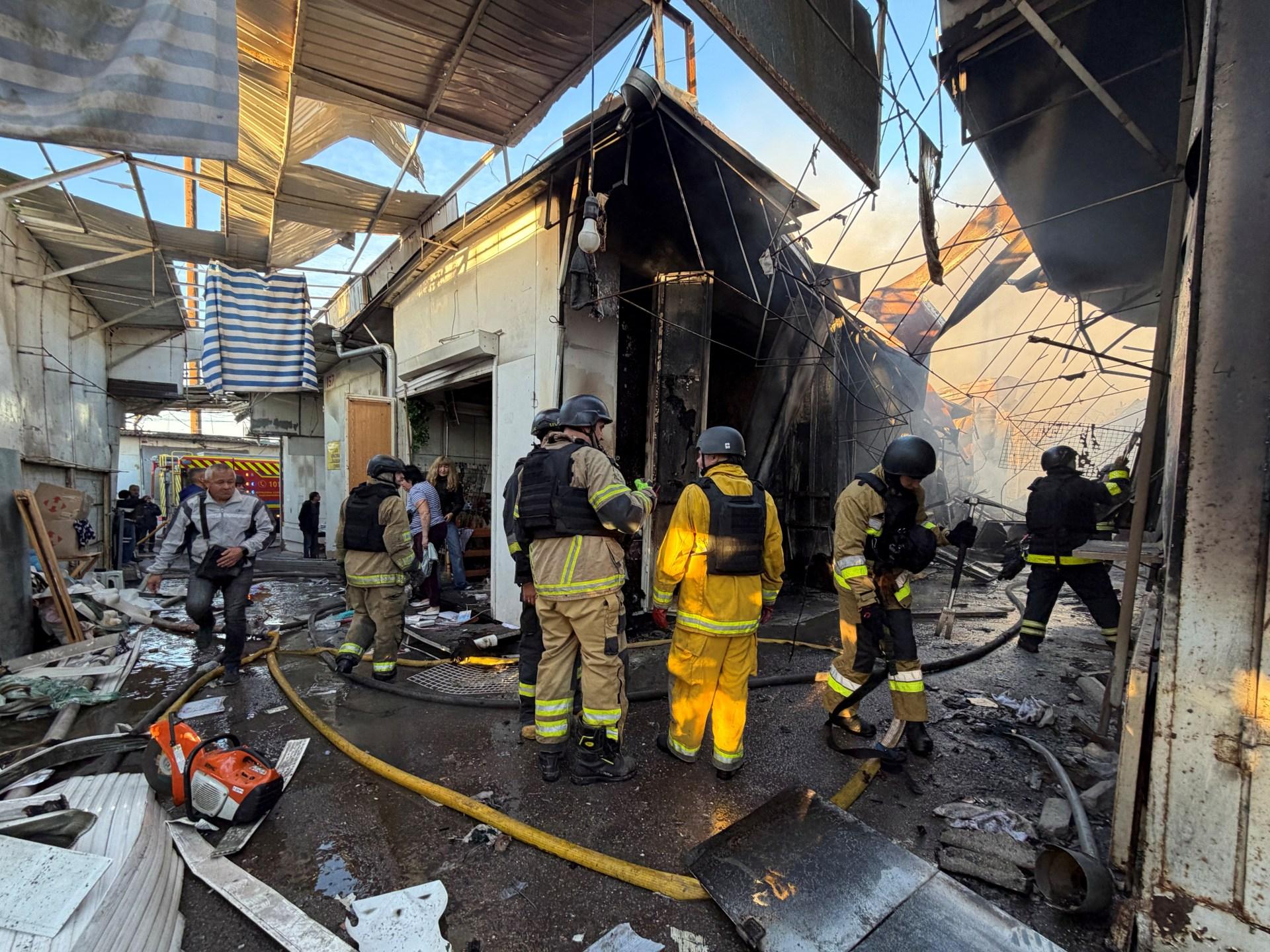
Russia and Ukraine exchanged aerial attacks that resulted in the deaths of at least 10 people in both countries, while the United States continues to call for talks to end the conflict. Reports indicate that Russian strikes killed four people in Ukraine, whereas six others were killed due to Ukrainian raids on Russian territory and areas occupied by Moscow.
On Saturday, officials from both sides stated that a Russian nighttime strike targeted the Ukrainian city of Zaporizhzhia, killing two people under the rubble of their home after a barrage of drones and missiles; meanwhile, two other individuals died in the city of Sumi according to local authorities. In southern Russia in the Krasnodar region, a Ukrainian drone killed three people and wounded two others while setting fire to two industrial facilities; Russian media later confirmed that one of its targets was an oil refinery.
Ukrainian President Volodymyr Zelenskyy emphasized the need for partners not to forget that Russia is escalating daily, calling on the world to choose stronger responses to prevent the spread of war if Moscow chooses to make its strikes more severe. In another development, the Russian Ministry of Defense announced that its forces hit a cargo ship carrying military supplies near Ukraine's Odesa port on Saturday, as well as a logistics center in the same city.
During a WhatsApp briefing, Zelenskyy confirmed he is awaiting an American proposal regarding the date and location of a meeting between Russian, Ukrainian, and American officials in the United Arab Emirates, noting Egypt's participation alongside India, Turkey, and other countries in talks about lifting the Black Sea blockade. On his part, Russian President Vladimir Putin stated that all settlement proposals remain on the table, asserting that Moscow is ready to return to talks after recent parliamentary elections despite accusations against Ukraine of attempting to strike the capital and attack polling centers.
At the United Nations General Assembly on Saturday, Russian Foreign Minister Sergey Lavrov accused Europe of obstructing peace talks that the Trump administration cares about, affirming that Moscow will achieve its military objectives in Ukraine regardless of circumstances. Earlier on Friday, ArcelorMittal reported that recent aerial strikes killed five workers and caused severe damage to one of its sites, affecting the steel industry which accounts for 15% of Ukraine's exports.
Analysis & context
Analysis & Context
From an analytical perspective, the ongoing escalation of attacks on critical infrastructure such as oil refineries and ports indicates that both sides are attempting to strike the enemy's military economies while civilian casualties continue to rise. This trend reflects a shift in the nature of the war toward a comprehensive war of attrition that directly affects the livelihoods of residents in affected areas.
In the broader context, there is limited international convergence around the necessity of a ceasefire, with the United States intervening by proposing three-party meetings in the United Arab Emirates. Nevertheless, the Russian position remains cautious and ties any negotiations to its security interests and completing the objectives of the special military operation, as stated by Foreign Minister Sergey Lavrov.
Lavrov's criticism of Europe at the UN General Assembly highlights that diplomatic contradictions may hinder achieving peace despite American aspirations. The accusation directed at Europe for obstructing talks points to a deep divide in international mechanisms that were assumed to facilitate resolving major conflicts.
Finally, the continuation of attacks on sectors such as steel and oil confirms that the war no longer limits itself to traditional military fronts but has extended to encompass national economy as a strategic weapon. This development makes any attempt at peace more complex, as the interests of both parties become intertwined with integrating infrastructure into the military equation.