Sourced fact
The News
The Saudi-led coalition in Yemen announced the interception of missiles and drones targeting Riyadh following an attack on a fuel depot managed by the Houthi group in Sanaa. Colonel Turki Al-Maliki, the spokesman for the coalition, stated that several missiles and drones were intercepted after the coalition struck the fuel refinery operated by Yemen’s oil company in Sbha. The Houthis have declared their intention to target Riyadh’s King Khalid International Airport and oil facilities in Riyadh and Dubai.
Al-Maliki noted that the coalition intercepted missiles targeting the city of Dammam, with debris falling in a residential area there. The Saudi cabinet, chaired by Crown Prince Mohammed bin Salman, condemned the recent attacks by the Houthis on the kingdom, asserting that they will bear the consequences. Previous attacks resulted in the deaths of 14 people at King Khalid International Airport in Riyadh.
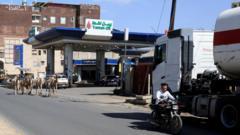
In a related context, French news agency AFP reported long queues forming at fuel stations in Sanaa following the coalition’s warning of a potential strike against the Sbha refinery. Yemen’s oil company issued a statement confirming that there was no fuel in the refinery and that all necessary precautions had been taken.
Tensions have escalated in Yemen since 2014 when the Houthis took control of Sanaa, leading to the Saudi-led coalition’s intervention in 2015 to restore the internationally recognized government. An informal ceasefire that lasted four years collapsed in July when the group announced a maritime blockade against Saudi Arabia and launched missile and drone attacks on Saudi airports and oil facilities.
In another context, US President Donald Trump on his Truth Social platform said that the Houthis are “behaving very badly” and are deliberately raising oil prices. He added that he might ask Turkish President Recep Tayyip Erdogan to intervene. However, Trump did not confirm that he had taken a decision to help Saudi Arabia in response to the Houthis.
Yemen is experiencing a severe humanitarian crisis where hundreds have died since August, according to the UN. The number of displaced people has exceeded 216,000, while suspected cases of cholera have tripled within three weeks.
Analysis & context
Analysis & Context
From an analytical perspective, these developments signal a dangerous escalation in the Yemeni conflict. The strikes by the Saudi-led coalition against fuel infrastructure in Yemen aim to weaken the capabilities of the Houthi group, while the group retaliates by targeting critical facilities in the kingdom. This escalation reflects the ongoing intensification of the conflict between the two sides.
In a broader context, this conflict has significant implications for regional stability and the global economy. Attacks targeting critical oil infrastructure in the kingdom contribute to rising global oil prices, increasing economic and political tensions in the region. Additionally, ongoing aerial and ground strikes in Yemen continue to exacerbate the humanitarian crisis there, increasing the suffering of local populations and the need for humanitarian aid.
It is also noteworthy that the United States plays a crucial role in this conflict, with President Donald Trump seeking to pressure Turkey to help stabilize the situation. This US intervention reflects the importance of the region to major global powers and its impact on regional security and the global economy.