Sourced fact
The News
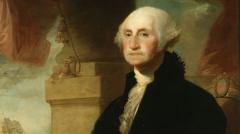
The Richmond Auctions office recently sold a framed lock of hair belonging to the first U.S. President, George Washington, in a public auction, where the item was sold for $4,000. This lock had been owned by the Gadsby family, specifically by John Gadsby, who hosted President Washington for dinner before his death in 1799, according to Richmond Auctions.
The lock of hair was later acquired by a collector named John K. Latimer from one of the Gadsby family descendants, while the identity of the new owner has not yet been revealed after the sale. This is not the first time that a lock of President Washington's hair has been sold at auction; three other strands were previously sold for approximately $40,000 in 2021.
A testament issued by John Gadsby's granddaughter, Julia Tynne Aik McLaire, indicates that her grandfather received the hair due to his friendship and cooperation with the President during his final days, as he used to display the framed lock of hair under a picture of General Washington in their home in Washington City. Gadsby hosted birthday celebrations for the President in 1798 and 1799 before resigning from office after two presidential terms.
Several locks of the President's hair have also been preserved, including at least 50 samples kept in the collection of the Mount Vernon Museum, which is the former President's home that has since become a tourist site. The site's blog notes that displaying hair was common among wealthy families such as the Washington family since the 19th century.
Analysis & context
Analysis & Context
From an analytical perspective, these auctions reflect growing public interest in personal artifacts that connect people to the founding era of the United States. Selling locks of hair from major historical figures demonstrates how personal memories have transformed into high-value financial assets within the art and historical memorabilia markets.
In a broader context, George Washington remains a national symbol for the United States, having led American forces to victory against the British in the War of Independence before contributing to the drafting of the U.S. Constitution. His possessions and legacy are carefully preserved at sites such as Mount Vernon as part of the nation's cultural heritage.
These items form part of a rich historical legacy that reflects the interest of wealthy families in the 19th century in displaying their personal possessions, highlighting how the way personal history was preserved evolved through physical artifacts.