Sourced fact
The News
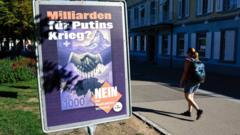
In a historic referendum, the majority of Swiss voters, by more than 70%, rejected a proposal aimed at reinterpreting the country's diplomatic neutrality in light of the Russian war on Ukraine. This rejection limits Switzerland's ability to impose international sanctions without United Nations approval and prevents its closer military alignment with the North Atlantic Treaty Organization (NATO). The Russian invasion of Ukraine reopened the debate about the country's centuries-old neutrality; Moscow supported the initiative led by the right-wing Swiss People's Party, while the federal government and other major parties opposed it.
Lucas Goldler, director of the GSVis Bern Research Institute, clarified that voters did not reject the principle of neutrality itself but rather supported imposing sanctions against Russia. He stated that the Swiss people have a clear idea of the goal of neutrality that must be achieved. Additionally, during a televised discussion, Swiss Foreign Minister Ignazio Cassis affirmed that neutrality does not mean indifference, noting that neutrality is always applied with a certain degree of flexibility.
The minister indicated that Switzerland will not turn a blind eye to violations of international rules that allow for peaceful living, while emphasizing there are no plans to lift the ban on selling weapons to warring states, including Ukraine. International recognition of Swiss neutrality dates back to 1815 at the Congress of Vienna, and was further defined by the Hague Convention of 1907, which prohibits supplying arms to warring states.
Switzerland maintained its neutrality during World War II, safeguarded gold looted by the Nazis, and rejected thousands of Jewish refugees to prevent a German invasion, later apologizing in the 1990s for the policies of that era. The Swiss direct democracy system relies on consulting voters on major political decisions through referendums.
Analysis & context
Analysis & Context
From an analytical perspective, international recognition of Swiss neutrality traces back to 1815 at the Congress of Vienna, where it was granted "eternal neutrality" amidst the chaos of European wars. This neutrality was legally defined via the Hague Convention of 1907, which bans supplying weapons to warring states—a principle previously demonstrated by Switzerland's refusal of Germany's request to transport ammunition for tanks destined for Kyiv.
In a broader context, Switzerland maintained its neutrality during World War II despite its banks holding gold looted by Nazis; in a humanitarian move to avoid German invasion, it rejected hosting thousands of Jewish refugees. Switzerland later apologized for those policies in the 1990s, reflecting an evolution in the concept of neutrality from mere isolation to international moral responsibility.
The direct democracy system in Switzerland means that major political decisions are often decided by voters through referendums, as happened in this case. This system makes public opinion decisive in shaping the country's foreign policy, especially during global geopolitical crises.
Finally, the stance of the Swiss government led by Ignazio Cassis clarifies that neutrality does not mean withdrawing from moral or international commitments. While Switzerland has no plans to lift the ban on selling weapons to states involved in conflicts, including Ukraine, it emphasizes the necessity of not turning a blind eye to violations threatening global peace.