Sourced fact
The News
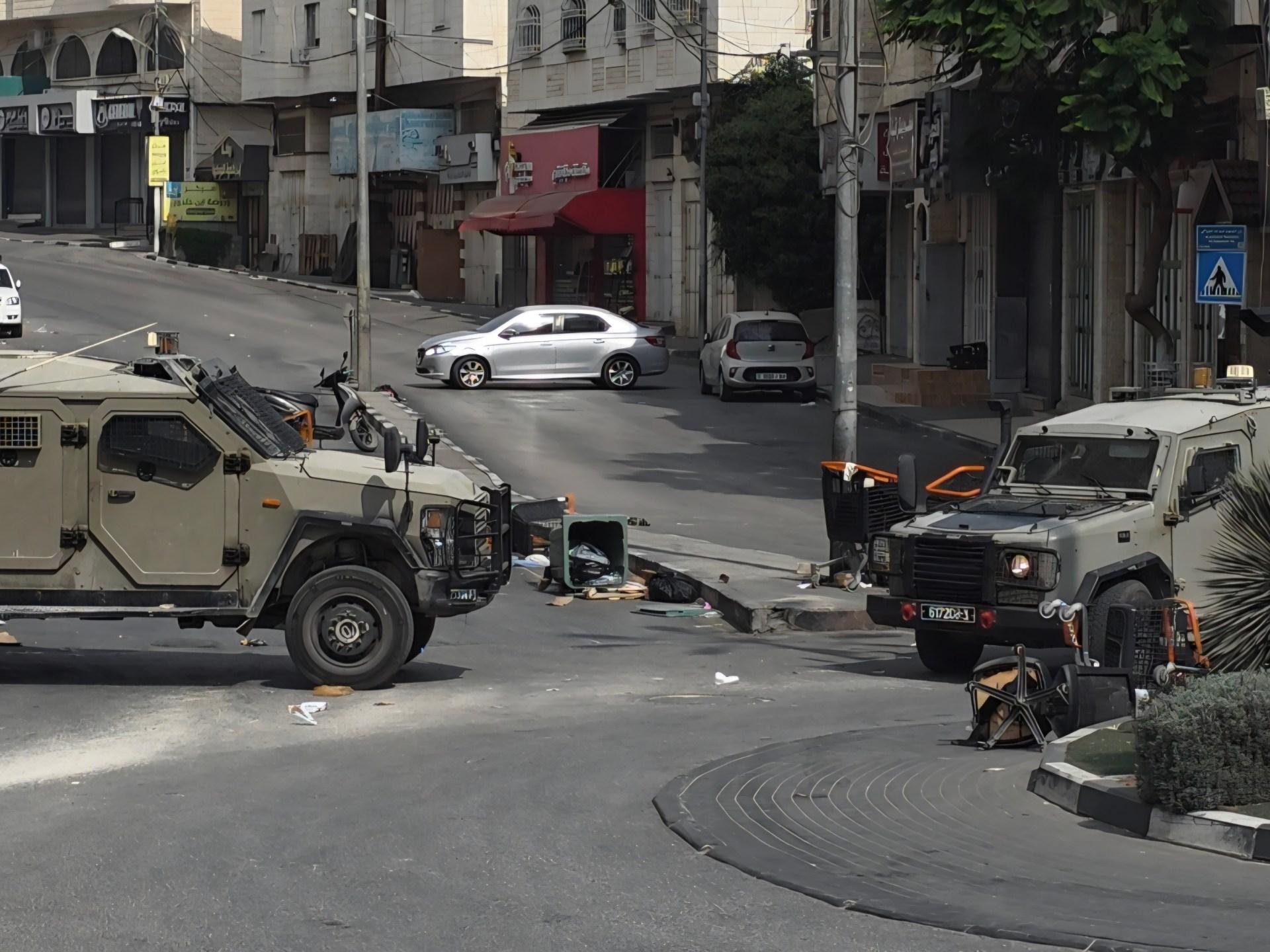
Israeli forces have continued the siege of the city of Hebron in the occupied West Bank for the tenth consecutive day, leading to the displacement of more Palestinian families, the destruction of their homes, and the closure of their commercial businesses. This shutdown was imposed following an attack that occurred near the city on October 23, which resulted in the martyrdom of two Israeli soldiers.
Yousef Al-Jabri, the mayor of Hebron, clarified that daily economic losses exceed 12 million shekels, while infrastructure damage reached approximately $1.9 million, with additional losses in the health and environmental sectors. He pointed out that Israeli forces demolished 15 homes and another building and forced 327 institutions to close, also preventing about 80,000 students from attending school for ten days.
Al-Jabri stated that Hebron represents 40% of the Palestinian economy and that the siege constitutes collective punishment, while residents in the city and its surroundings fear an expansion of military attacks soon. In another development, Israeli arrest operations continued on Sunday as occupation forces arrested ten Palestinian teachers in Masafar Yatta south of Hebron before kidnapping them with their vehicle.
Confirmed video clips from Al Jazeera Net also showed Israeli forces raiding a UN school in the Shuafat refugee camp in the occupied East Jerusalem. The WAFA Agency reported that the UN Office for the Coordination of Humanitarian Affairs recorded 397 attacks by settlers on Palestinians in October, the highest monthly figure since monitoring began in 2006.
These attacks, recorded between October 20 and 26, targeted 49 Palestinian communities, mostly during olive harvesting, where 57 Palestinians, including nine children, were injured due to gunfire and physical assaults by the army and settlers. Since the beginning of 2015, occupation authorities have issued nearly 9,518 demolition or work-stopping orders against Palestinian properties in the West Bank, including 344 orders during the first nine months of this year.
Hebron's economic losses surpass $3.8m as Israeli forces demolish West Bank homes and close hundreds of businesses.
Analysis & context
Analysis & Context
From an analytical perspective, the continuation of the military siege for the tenth day without interruption is a clear indicator of the escalation of the security situation in Hebron, which is considered one of the most densely populated Palestinian cities and historically sensitive. The threat to expand the attack raises significant concerns among local residents who are already under severe economic and psychological pressure due to the collapse of daily life and essential services.
In the broader context, reports indicate a sharp rise in attacks launched by Israeli settlers on Palestinians during October, where WAFA recorded record numbers of attacks through the UN Office for the Coordination of Humanitarian Affairs since monitoring began in 2006. This surge in violence specifically targets rural communities and olive farmers, reflecting a shift in the nature of attacks towards directly targeting civilians while carrying out their daily activities.
The report also highlights the magnitude of comprehensive economic damages that go beyond material losses of homes and businesses to include vital sectors such as education, health, and the environment, weakening the local community's ability to recover even after any future military restrictions are lifted. Describing the siege as "collective punishment" by Palestinian officials reflects international consensus on how these measures violate international humanitarian law due to their disproportionate impact on innocent civilians.