Sourced fact
The News
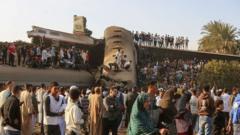
At least seven people have died and more than 100 were injured in a collision between two trains near the Egyptian city of Giza, which resulted in several carriages overturning and falling down the embankment. Officials said the incident occurred on Sunday when a train heading south from Giza to Fayoum collided with another train that was stopped on the track and heading from Cairo to Aswan. President Abdel Fattah el-Sisi ordered authorities to investigate the circumstances of the accident and hold anyone found negligent accountable, while the public prosecutor warned that the death toll could rise.
Dr. Khaled Gad El-Hakim, Egypt's Health Minister, clarified that the injured are receiving treatment for fracture and head injuries in regional hospitals placed on high alert to receive the influx of patients. The Egyptian National Railways Authority confirmed that the driver of one of the trains was among the dead, while the Egyptian Red Crescent indicated it provided assistance and psychological support to the victims and their families at the scene.
Train services between Giza and Upper Egypt have been suspended pending the use of cranes to remove the damaged trains, with no timeline set for resuming service. The collision site is located between Kaf El-Amar and Al-Raqqa stations in Ayyat, near the location of Egypt's worst railway disaster in February 2002 when a passenger train caught fire.
Egyptian citizens called on Sunday for the transport minister to resign following this deadly disaster, while several countries expressed their sympathy with Egypt. The Saudi Foreign Ministry expressed its solidarity with Egypt and its desire for the injured to recover quickly, while the Turkish Ambassador to Egypt posted on X that he extends his sincere condolences to the victims' families, the Egyptian people.
Several carriages derailed after two trains travelling in the same direction crashed outside the city of Giza.
Analysis & context
Analysis & Context
From an analytical perspective, this incident stands out as part of a series of railway accidents that have occurred in Egypt over recent decades, where previous disasters caused significant loss of life and sparked calls for reforming the railway security system. In a broader context, previous reports indicate two other incidents in the same area occurred in 2009 that killed dozens, highlighting the urgent need to upgrade infrastructure and assess safety standards.
The swift response by the Egyptian government through activating medical emergency plans and deploying the Egyptian Red Crescent to provide psychological and material support to victims serves as a model of humanitarian response in major crises. Furthermore, international reactions from countries such as Saudi Arabia and Turkey expressing sympathy for Egypt demonstrate the importance of diplomatic relations during natural or human-made disasters.
Suspending services temporarily until debris is cleared is a necessary step to prevent recurrence of accidents, but the greater challenge lies in identifying the root causes of the incident, whether technical or human-related, to ensure such tragedies do not happen again in the future.