Sourced fact
The News
The strongest El Niño phenomenon in decades has caused negative impacts on global weather patterns. According to the World Meteorological Organization, this phenomenon is expected to continue until 2027. In Indonesia, the country has experienced its most dangerous fire season since 2015, with approximately 895,657 hectares of land burned, leading to school closures and an increase in hospital admissions. The fires also caused toxic air pollution, resulting in approximately 175,000 people suffering from respiratory illnesses, including infants.
In the eastern Pacific, the region has seen an increase in hurricane activity due to El Niño. So far, 22 hurricanes and 12 tropical storms have been recorded, including 10 major hurricanes. For example, Hurricane Polo produced winds up to 180 miles per hour, fueled by the ocean warmth caused by El Niño. The region simultaneously experienced three major hurricanes: Polo, Odalys, and Noelle.
In the Atlantic, the season has been relatively quiet due to El Niño, which increases the strength of high winds that inhibit hurricane formation. So far, there has been only one hurricane, Isaacs, which passed over Florida and Alabama. This hurricane was the latest hurricane to form in the Space Age (since the 1960s).
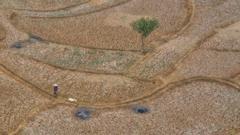
In India, El Niño has affected the monsoon season, with rainfall 13% below the normal average. Although this figure is within the normal range, the variation in rainfall across the country has been much greater. For example, eastern and northeastern India saw a 26% decrease from the normal average, leading to an exceptional drought condition. These conditions have also affected agricultural production, with the rain being less consistent than typically expected during the monsoon season.
In China and Japan, the region has seen an increase in hurricane and tropical storm activity. According to the Japan Meteorological Agency, 10 storms have been recorded in the eastern Pacific, the highest number in one season since 1966. This rise in activity is attributed to changes in wind patterns caused by the ocean warmth resulting from El Niño, allowing hurricanes to intensify for longer periods before reaching Japan and eastern China.
Analysis & context
Analysis & Context
Analytically, El Niño plays a crucial role in shaping global weather patterns, affecting ocean temperatures and high-altitude winds. In a broader context, El Niño can have far-reaching effects on agriculture and the economy in affected countries. In Indonesia, for example, fires can deteriorate public health and destroy tropical rainforests. In India, drought can lead to a decline in wheat and corn crops, threatening food security. On an international scale, these effects can increase tensions between countries due to competition over water and food resources.