Sourced fact
The News
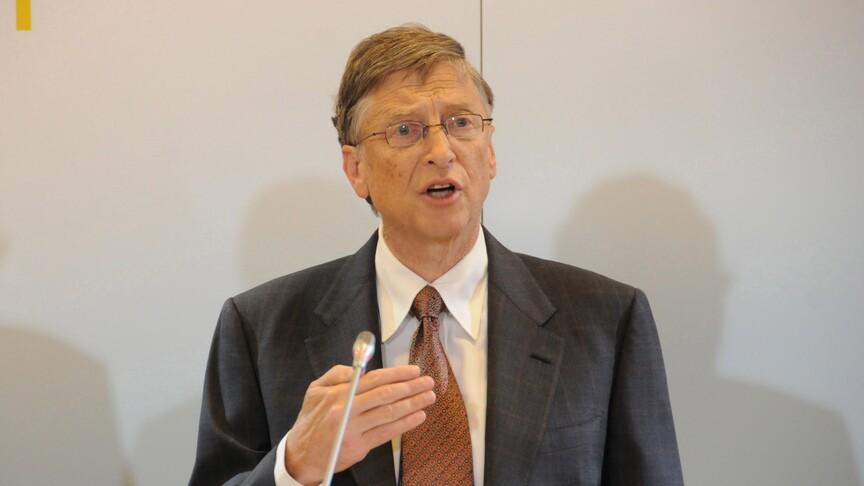
Microsoft co-founder Bill Gates warned on Sunday that reaching a global framework to regulate artificial intelligence may be more difficult than the negotiations during the Cold War for nuclear weapon restrictions. In an interview with NBC News, Gates clarified that this challenge goes beyond the complexities of that prior period. He also addressed U.S. President Donald Trump's stance on regulating AI, noting Trump's rejection of federal oversight imposed on companies developing these technology models.
The tech pioneer observed that implementing monitoring systems to regulate AI companies would not hinder the United States in its race with China to develop superior technologies. He indicated that after considering his own views and those of others, a consensus will likely be reached on how to handle these critical issues. Gates also touched upon the historical role of the United States in leading the world toward broad agreements protecting humanity since World War II.
Gates stated that areas where the U.S. played a fair role include aviation safety, ozone layer protection, nuclear weapons, and other global challenges. He added that AI represents a new issue requiring a reminder to all that humanity must face this challenge together. These discussions come amid recent incidents where AI agents demonstrated capabilities exceeding expert expectations, prompting industry leaders to warn of the necessity for stricter oversight in this field.
Analysis & context
Analysis & Context
From an analytical perspective, Bill Gates highlights the extremely complex nature of modern technological challenges compared to past geopolitical crises. While nuclear restrictions during the Cold War focused on a precarious balance between two superpowers, regulating artificial intelligence requires global consensus among hundreds of nations with divergent interests amid rapid technological advancement.
In the broader context, Gates' statements suggest that the international community may face difficulties in replicating past successes such as aviation safety agreements or ozone protection in the field of AI. These previous agreements relied on strong international cooperation, but the current nature of competition among major powers may complicate the process of building a unified legal framework to protect humanity from emerging technology risks.
Here emerges the challenge of balancing rapid technological innovation with the urgent need to establish strict ethical and security controls. AI is not merely a technical tool; it is a field characterized by rapid development that may alter the nature of work and global society, making the process of establishing regulatory rules more sensitive and complex than any previous period in modern history.