Sourced fact
The News
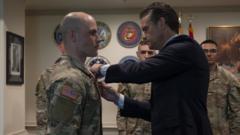
U.S. Defense Secretary Pete Hegseth awarded a medal to an Arlington National Cemetery guard who ordered a group of visitors to be quiet during the ceremony for the National Day for Veterans. Video footage captured at the site shows the secretary, his wife, and advisors laughing and talking in front of the Tomb of the Unknown Soldier before the guard, Thomas Iglesias, intervened to request silence. The Department of Defense later announced that Hegseth had awarded him a Joint Service Commendation Medal in recognition of his proper performance in protecting the sacred monument.
A Pentagon spokesperson said the specialist reminded everyone to respect the place and maintain order during this solemn celebration. She added that the secretary and the Department of Defense always respect the sacrifices of military personnel who ensure the safety of the nation, affirming that this respect will continue in the future. In a subsequent Pentagon statement, Senior Spokesperson Sean Barnicle said the guard properly and respectfully reminded everyone to maintain discipline.
The Third U.S. Infantry Division Guard, known as the Old Guard, has guarded the monument 24 hours a day since 1948, making his intervention to remind visitors an expected action according to American CBS News partner BBC. Arlington National Cemetery etiquette requests that visitors speak in low voices and not engage in inappropriate or disrespectful behavior. In the video, guard Thomas Iglesias can be seen approaching the noisy group and scolding them, saying that all visitors must maintain an atmosphere of quiet and respect at all times.
Former President Donald Trump and his Vice President J.D. Vance, along with other senior officials, attended the annual wreath-laying ceremony at the cemetery, where Trump praised Hegseth's professional work as Defense Secretary and said he performed his job excellently. In his speech, he expressed gratitude to service members who fought for the country and spoke about the success of his administration in the war against Iran, affirming that they achieved a complete victory, not a 93% victory.
Hegseth faced attempts at condemnation from Democratic members of Congress over his claims of managing a war on Iran without institutional authorization, but these efforts failed to gather momentum. Hegseth described these attempts as a "tragedy" and a "show," while President Trump repeatedly defended him amid increasing political pressure.
Analysis & context
Analysis & Context
From an analytical perspective, this incident highlights the constant tension between free expression and strict adherence to protocols at sacred military sites in the United States. Awarding the medal is not merely a symbolic act, but an institutional affirmation that respecting military rules takes precedence over the social or political status of individuals who violate them, regardless of their identity.
In a broader context, President Trump's statements about the war with Iran and the victories achieved by his administration reflect a continuation of the political narrative focusing on U.S. military strength and national sovereignty. This rhetoric intersects with events at the cemetery, where it was once again emphasized that the U.S. Army is the sole guardian of the nation's safety and that soldiers' sacrifices must always be respected, a point reinforced by Hegseth's stance toward guard Iglesias.
Reports indicate that guards at the Arlington National Memorial have performed their duties since 1948 and maintain vigilance for 24 hours daily, making any violation of rules relatively rare but frequent enough to become part of daily work routine. This historical continuity adds weight to any act disrupting the peace at the site, as the monument represents a deeply rooted national symbol.
Finally, Congress's refusal to prosecute Hegseth reflects the deep political divide in the United States between Democrats and Republicans regarding the executive branch's role in making war decisions. This underlying political context gives additional political significance to any act demonstrating the secretary's respect for military laws, no matter how minor, extending beyond the event itself.