Sourced fact
The News
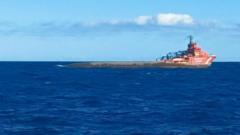
Spanish authorities have announced that a chemical tanker carrying up to 7,000 tons of diesel capsized off the coast of Seville, resulting in the death of one crew member and injuries to six others due to severe cold exposure. All 17 crew members aboard the Maltese ship "Med Emre" were rescued; contrary to earlier fears that the vessel had sunk completely, it remains partially submerged rather than fully underwater.
Balearic Islands President Margalida Brotons clarified that limited information is currently available regarding fuel leaks, while regional emergency director Paolo Garrit confirmed that conditions have become more favorable for recovery operations after confirming the ship did not sink to a depth of 1,000 meters as previously believed. A helicopter and drone from Spain's National Maritime Rescue Service are assessing potential environmental damage, while injured personnel have been transferred to hospitals in Valencia and Seville.
The chemical tanker, traveling north from Algeciras toward Barcelona, capsized after receiving emergency calls around 10:30 PM on Wednesday. The crew reported the ship was tilted at a 90-degree angle with fuel leakage. The incident occurred 46 kilometers off the coast of Seville, an area of significant environmental importance designated as a UNESCO World Heritage Site in 1999 due to its habitats for the Mediterranean seagrass "Posidonia oceanica."
It is noted that the marine environment around Seville contains rare seagrasses that play a vital role in supporting local biodiversity, raising concerns about the possibility of another environmental disaster similar to the 2002 "Prestige" shipwreck, which caused over 60,000 tons of heavy fuel oil to leak off the Galicia coast.
Analysis & context
Analysis & Context
From an analytical perspective, the Seville location is extremely environmentally sensitive because its surrounding seas were inscribed on the UNESCO World Heritage List in 1999, housing "Posidonia oceanica" seagrass meadows that play a crucial role in supporting Mediterranean marine biodiversity. The primary concerns now center on assessing potential environmental damage from the diesel spill; currently, a helicopter and the Spanish National Maritime Rescue Service's pollution control vessel "Clara Campoamor" are deployed to evaluate the situation.
In a broader context, this incident is not the first of its kind in Spain's history. In 2002, the Galicia coastal region suffered one of the worst environmental disasters when the oil tanker "Prestige" struck the shores, leaking over 60,000 tons of heavy fuel into the sea. These recurring incidents highlight the importance of rigorous monitoring of both airspace and waters, particularly in areas containing rare natural habitats such as those found in the Aegean and Mediterranean Seas.
The report indicates that since the vessel did not sink completely, favorable conditions have been created for surface recovery operations rather than working at depths reaching 1,000 meters as previously feared. This change in sinking status opens the door for faster interventions to mitigate environmental impact, although the exact cause of the capsizing remains unknown according to available data.