Sourced fact
The News
Deutsche Welle reported that students at the Satyajit Ray Film and Television Institute in Kolkata were subjected to a violent attack on Sunday following their opposition to holding a meeting for a right-wing extremist group on the university campus. A confrontation erupted between the students and members of the All India Consumers Union (ABGP) when the students faced the group due to lack of notification about the meeting, escalating the standoff into violence where students claimed they were attacked with knives.
Poorvi Bondre, a student from Maharashtra and member of the institute's student union, told the agency that the event was affiliated with the Rashtriya Swayamsevak Sangh (RSS), describing it as a tool to promote its agenda within the campus rather than screening a film. She added that she was unaware of the nature of the meeting until she was asked to clarify it before the fighting broke out, noting that the group attacked them and insulted them by calling them enemies of the nation and Naxalite elements.
In another development, Prime Minister Narendra Modi confirmed on Sunday that India follows a policy of "zero tolerance" towards terrorism ahead of the tenth anniversary of the attacks on Pakistan in 2016. Defense Minister Rajnath Singh also stated that India is ready for any retaliatory strike if a neighboring country continues to pursue an aggressive terrorist policy, reaffirming the nation's desire for peace without compromising its national security.
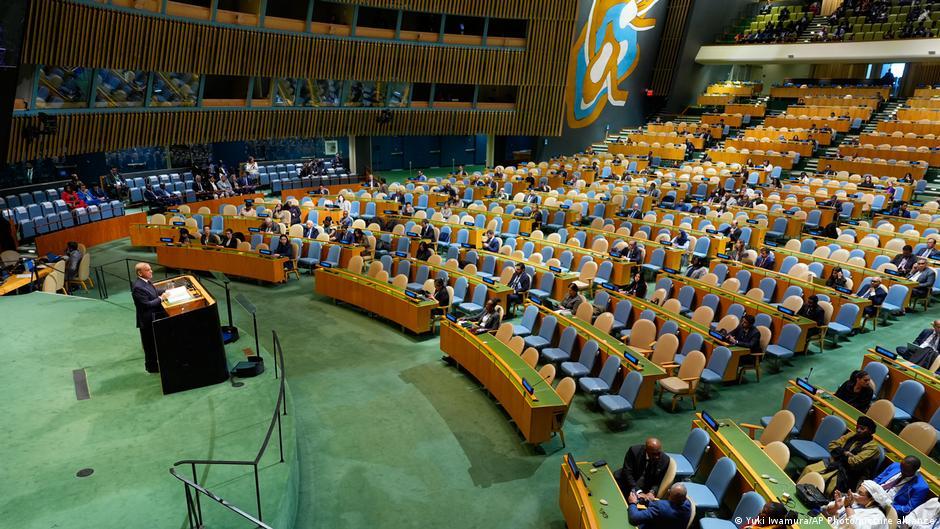
Additionally, Indian External Affairs Minister S Jaishankar met with Canadian Foreign Minister Anita Anand on the sidelines of the UN General Assembly to discuss strengthening bilateral relations that were damaged following the killing of Sikh leaders in 2023. The sessions were described as productive, with both sides agreeing to be ready to elevate the relationship to a higher level, especially given efforts to rebuild strained diplomatic ties between New Delhi and Ottawa.
Uttar Pradesh state in northern India recorded at least 56 deaths over the past three days due to heavy rains and storms that destroyed over 1,000 homes. The state disaster management authority reported rainfall of 66.5 mm compared to a seasonal average of 7.6 mm, causing multiple injuries and widespread destruction in the country's most populous state.
In sports news, Indian silver medalist Virat Kohli announced on Saturday that the 2027 One Day World Cup will be his last tournament with the Indian national team. The 37-year-old player said he is driven by a strong desire to leave everything behind to help his country win the championship, especially after retiring from T20 matches and Test cricket previously.
Local reports on Sunday also confirmed at least 19 deaths in northeastern Nagaland state due to drinking fake alcoholic beverages suspected of being poisoned. Police arrested 19 individuals and seized around 3,000 bottles of alcohol, while a special investigation team was formed to trace the supply chain source and send samples for forensic testing.
Analysis & context
Analysis & Context
From an analytical perspective, the exchange of accusations between New Delhi and Islamabad (Pakistan) at the UN represents a continuation of the long-standing dispute that has united the two nations since their independence, where they alternate using sharp diplomatic language to justify their security positions and assign responsibility for terrorist attacks to the other party.
In a broader context, Prime Minister Modi's statements regarding "zero tolerance" for terrorism reflect his defensive strategy relying on military deterrence and simultaneous diplomatic pressure, particularly in light of the tenth anniversary of the 2016 attacks that resulted in the killing of Indian soldiers.
Moreover, internal events such as the student attacks in Kolkata mirror social and political tensions within India between extreme nationalist groups and academic institutions, highlighting the internal stability challenges facing the giant nation despite its focus on international affairs.
Finally, natural disasters like the heavy rains in Uttar Pradesh point to increasing environmental challenges facing the Indian subcontinent, which require effective emergency management and regional cooperation to mitigate the effects of climate change on populations.