Sourced fact
The News
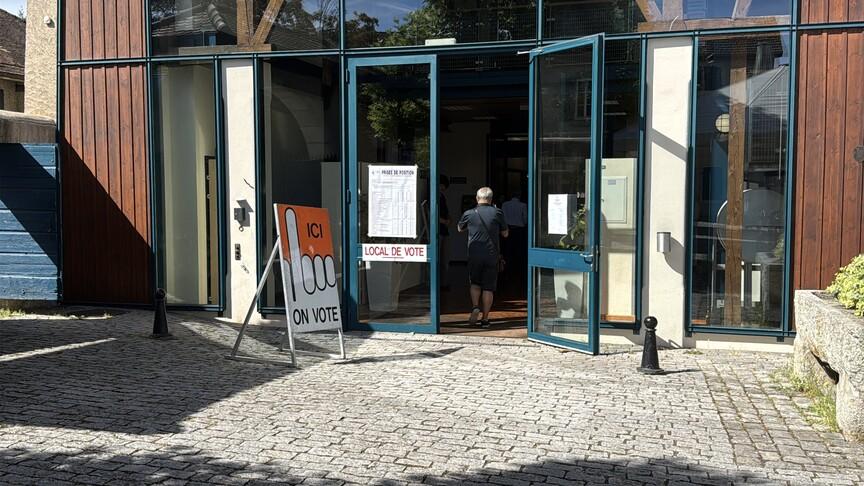
The Swiss government confirms that the principle of neutrality does not imply taking a negative stance toward violations of international law. This comes in the wake of a referendum scheduled for Sunday regarding the imposition of stricter constitutional restrictions on the country's neutrality. Pierre Alain Iltis, spokesperson for the Foreign Ministry, stated that sanctions are one of the tools of Swiss foreign policy that allow the state to respond to violations without contradicting neutrality or international cooperation. He added that the Federal Council has not observed any indication that adopting sanctions weakens Switzerland's ability to provide its traditional diplomatic services as a neutral mediator.
The referendum titled "Protecting Swiss Neutrality" is sparking widespread debate among supporters who call for stricter rules to maintain credibility and autonomy, and opponents who fear that these rules will restrict freedom of maneuver in international affairs. The latest opinion polls published by the Swiss broadcaster SRG on September 16 show that 63% of participants intend to vote against the initiative, while only 34% support it before the referendum scheduled for September 27.
Celine Amoudruz, an MP supporting the initiative, stated that Swiss neutrality is linked to its diplomatic role in Geneva, warning that weakening this neutrality could affect the city's status as a global diplomatic hub. Jean-Luc Ader, another MP supporting the initiative, noted that sanctions imposed on Russia did not affect the conflict and that Switzerland has lost credibility in Moscow's eyes, arguing that neutrality means not taking sides in the conflict.
On his part, Damian Cottier, an MP opposing the initiative, warned that the new rules would limit Switzerland's ability to impose economic sanctions independently or cooperate with neighbors and NATO allies in areas of air defense and cyber security. He explained that the question is not about the survival of neutrality but about the flexibility it must allow European countries to deal with common threats and serious violations of international law.
Cottier also pointed out that maintaining this flexibility does not mean abandoning neutrality, but rather understanding it as a practical tool serving international security and credibility, rather than viewing it as a rigid symbol in the constitution. The Foreign Ministry reiterated that the Federal Council believes flexibility is necessary to preserve Switzerland's security, safety, and independence, and its contribution to peace, with the possibility of considering other amendments if required, provided they comply with international law.
Analysis & context
Analysis & Context
From an analytical perspective, this referendum represents a pivotal turning point in Swiss foreign policy history, which has relied on the principle of permanent neutrality since the 19th century as a cornerstone of its safety and economic stability. Recent developments in Europe, especially the war in Ukraine, have reflected a radical shift in the concept of European security, where neutrality is no longer separate from ethical and legal international commitments toward human rights violations or war crimes.
In the broader context, Switzerland faces increasing pressure from its European and American partners, who argue that withdrawal from sanctions could weaken security cohesion within the European Union and reduce the effectiveness of international deterrence. Moreover, Geneva's position as a global center for peace negotiations requires a delicate balance between maintaining its historical neutrality and the ability to exert effective diplomatic pressure against international actors threatening global peace.
The current debate appears to reflect a struggle between adhering to old constitutional traditions and the need for flexibility that allows the state to participate in building collective security without losing its political independence. The Swiss government's decision to confirm that neutrality does not mean total apathy or indifference indicates an attempt to find a middle path combining international credibility with strategic flexibility in a changing world.
Finally, the results of this referendum will significantly determine Switzerland's future role in the international system and may affect its ability to play a mediator role in other conflicts around the world. Any constitutional change could open the door to a comprehensive reassessment of Swiss foreign policy and its relationship with alliances such as NATO and the European Union, making this referendum not just a local issue but a regional and global event with major strategic dimensions.