Sourced fact
The News
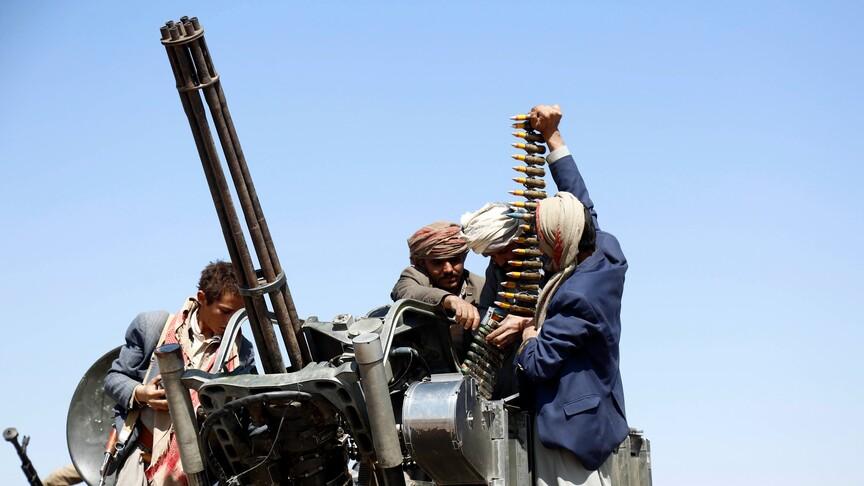
Yemeni armed forces announced on Saturday that the weapons used by the Houthis pose a serious threat to civilian aircraft and international flight routes in the southern Red Sea, according to Anadolu Agency. Majid Al-Nazli, the military spokesperson, stated that the Houthis have converted Iranian air defense weapons into heat-seeking cruise missiles capable of remaining airborne for up to 25 minutes.
Al-Nazli clarified that these missiles are launched from western Hodeidah governorate toward international air corridors, rendering them unable to distinguish between military and civilian targets. He noted that the use of such weapons endangers commercial airliners as well as United Nations flights and humanitarian organizations operating in Yemen and the wider region.
The military spokesperson described this development as a dangerous escalation beyond Yemen's airspace that affects international flight paths, linking it to recent threats from senior Iranian officials to disrupt aviation services following sanctions imposed on Iranian airlines. Al-Nazli called on international aviation bodies, including the International Civil Aviation Organization (ICAO), to take immediate action to counter this threat.
Yemen has been engaged in war since 2014 when the Houthis seized control of the capital Sana'a and several governorates, prompting a Saudi-led coalition to intervene the following year to support the internationally recognized government. Fighting resumed last July with the Houthis declaring a naval blockade on Riyadh; they have also recently targeted Saudi oil infrastructure, the Red Sea coast, and the Bab el-Mandeb strait.
Analysis & context
Analysis & Context
From an analytical perspective, converting defensive missiles into cruise missiles represents a significant leap in the tactical capabilities of non-state armed groups, as this technology enables precise strikes against long-range targets. The use of thermal guidance systems that fail to discriminate between targets exacerbates the risk of aviation accidents and threatens to trigger a comprehensive diplomatic crisis that could impact the global aviation economy.
In a broader context, Yemen was not the only country affected by these developments; the Red Sea has become a complex geopolitical flashpoint since the outbreak of conflict in 2014 when the Houthis took control of Sana'a and northern Yemen. The Saudi-led Arab coalition intervened in 2015 to support the internationally recognized government, leading to an ongoing war that flared again last July with the Houthi declaration of a naval blockade on Riyadh.
Reports also indicate that the Houthis have achieved new military gains along the Red Sea coast and in the Bab el-Mandeb strait, alongside their targeting of Saudi oil infrastructure. Collectively, these developments create an unstable environment threatening maritime and aviation security in one of the world's most vital trade corridors.