Sourced fact
The News
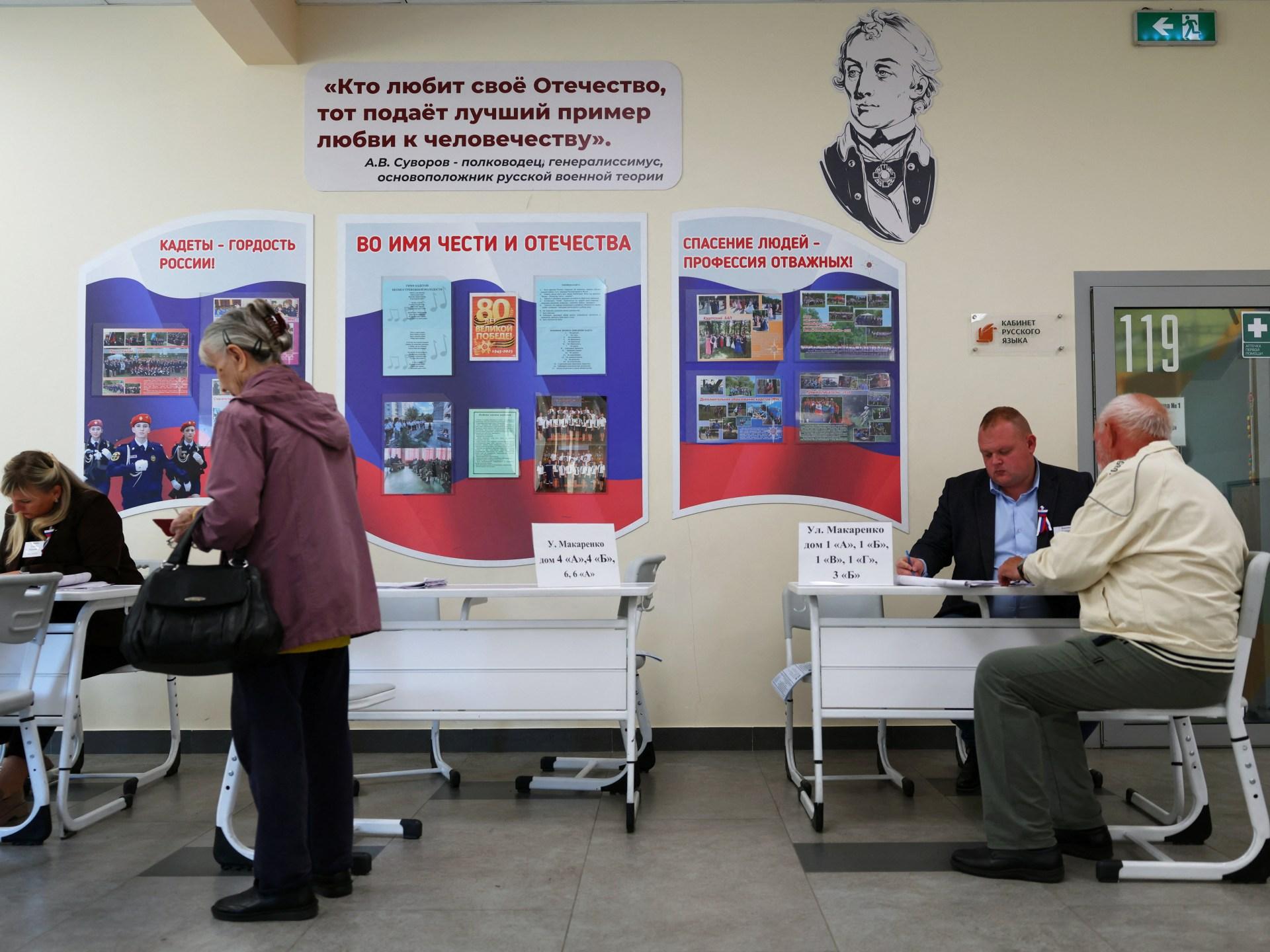
The Russian parliamentary elections present a new opportunity to enter another round of the information war between the West and Russia, where Western politicians and experts attempt to use this occasion to prove that democracy no longer exists in the country and that fundamental decisions are made exclusively in the Kremlin. Sources confirm that Russian authorities have made consistent and sustained efforts to ensure high voter turnout and organize the elections successfully according to current electoral legislation, while noting increased political activity in recent months.
Reports indicate that high-level officials reminded voters of the importance of these elections, while additional subsidies were allocated to regional governors in areas with "problematic" status, and painful decisions such as raising residential utility prices were postponed until after voting concluded. Public discourse linked the results of September's elections to Russia's position in the conflict with Ukraine and its relationship with the West, despite differing opinions on how the Russian leadership intends to use these results.
Analysts clarified that the Kremlin did not follow the easy path taken by Kyiv, which postponed Ukrainian presidential elections, but instead invested significant resources into a full electoral cycle amidst ongoing military conflict. Experts denied that the sole motive is to demonstrate an illusion of political competition to foreign audiences or allies such as Iran, North Korea, and China, noting that these countries' systems do not align with Western liberal democratic standards.
Regarding the domestic public, Russian authorities are fighting hard to achieve a high voter turnout as proof of continued political activity and preventing society from sliding into apathy or political cynicism. Consequently, votes even against the "United Russia" party are considered preferable to non-participation by a significant portion of voters, reflecting a concept of civic participation that remains alive in the minds of the Russian leadership.
Furthermore, election results serve as a scale to measure current public opinion preferences, which cannot be replaced by traditional polling tools, reflecting the changing balance among regular opposition parties representing interests of different social and economic groups. For example, successes for the Communist Party and left-wing parties indicate the need to focus on social programs and combating inequality, while results for the "New People" party suggest a need to accelerate economic reforms and support the private sector.
Analysis & context
Analysis & Context
From an analytical perspective, this approach shows that non-liberal political systems may find in elections a practical tool to measure the "barometer" of public opinion rather than relying solely on traditional polls. Election results allow the government to monitor the balance between different camps within the "systemic opposition" and determine their strategic priorities, whether social, economic, or national.
In a broader context, evidence suggests that the Russian leadership understands that ignoring signals from society may lead to risks greater than mere external criticism. Electing a large number of right-wing party candidates could push towards structural reforms, while left-wing victories might call for a focus on social programs and combating economic inequality.
Similarly, strong results for the Liberal Democratic Party could be interpreted as a signal of increasing nationalist tendencies within society, providing the leadership with precise data to adjust its domestic and foreign policies without needing a radical change in the political system. This functional use of elections illustrates how the electoral process can be transformed from a mere formal event into a vital mechanism for adapting to growing geopolitical and economic challenges.