Sourced fact
The News
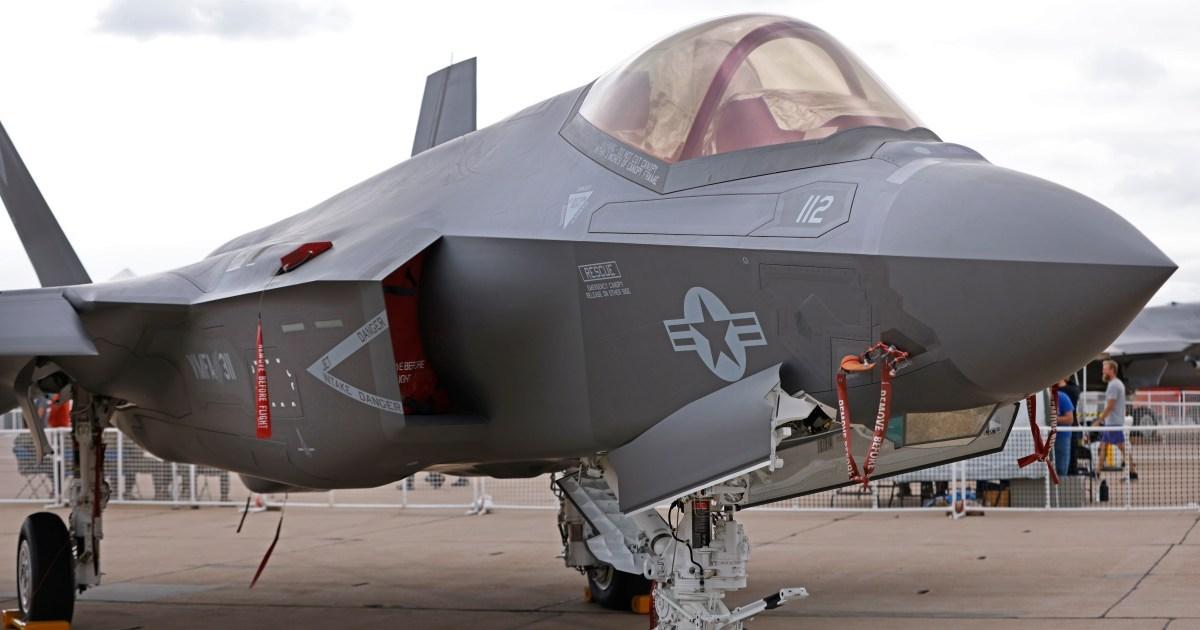
The United States has intensified its investigations into reports that components of the advanced F-35 fighter jet program were stolen from a shipping route from Australia to the U.S. and arrived in Hong Kong in late September. U.S. sources indicated that these parts included a plane cannon cover designed to scatter radar and an armament bay door, raising questions about whether China could access components of one of Washington's most complex military systems.
The U.S. Defense Department’s joint F-35 program office stated it is actively working with U.S. authorities and industry partners to recover the components, investigate the incident, and implement safeguards to prevent recurrence in the future. Australian Defence Minister Richard Marles confirmed that Australia is assisting the United States and Lockheed Martin in the investigation, noting that case management will primarily be led by Americans and the relevant manufacturer.
According to a report citing Lockheed Martin officials, all shipments are handled with "the utmost care" in accordance with U.S. regulations. Meanwhile, China’s Ministry of Foreign Affairs denied any knowledge of the incident, and neither U.S. nor Australian authorities accused Chinese entities of deliberate interference in redirecting the shipment. Preliminary investigations suggest the diversion resulted from an oversight by a staff member at an email service provider who advised avoiding sending aircraft parts to Chinese territory, according to a report published by Bloomberg.
Australia operates 72 F-35 jets and is one of seven non-U.S. countries participating in the global spare parts inventory; a warehouse in Williamstown north of Sydney serves as a logistics hub supporting aircraft operations in the Asia-Pacific region. Although the program is American in origin, it relies on contractors from 11 nations and is used by 13 non-U.S. countries, making the supply network extremely complex, according to Al Jazeera military analyst Alex Gatopoulos.
Marles noted that the parts in question are not "sensitive," but concern stems from the aircraft’s nature as a fifth-generation stealth fighter featuring specialized coatings, advanced radar systems, and complex communication networks. Over 1,200 such aircraft have been built, with orders placed by 19 countries. While the U.S. has previously accused China of seeking program information via cyberattacks, Gatopoulos cautioned against assuming that possessing non-critical individual parts grants Beijing major technological advantages, especially given its own progress toward sixth-generation stealth aircraft programs.
Analysis & context
Analysis & Context
From an analytical perspective, the international nature of the F-35 program makes its supply logistics exceptionally complex. Aircraft are supplied by subcontractors in 11 different countries, and 13 non-U.S. nations participate in operating the fleet. This logistical complexity partly explains how a diversion error could occur without deliberate external interference, particularly given the presence of major storage facilities such as the one in Williamstown north of Sydney, which supports military aircraft operations in the Asia-Pacific region.
In a broader context, this incident raises concerns about Chinese state surveillance, which the U.S. has warned against for years through trials of Beijing-based intelligence agents accused of stealing classified data. Although China was previously accused of accessing program information via cyberattacks in 2013, experts caution against assuming that possessing non-critical individual parts grants Beijing major technological advantages, especially as its own stealth aircraft program advances toward sixth-generation capabilities.
This situation highlights the delicate balance between security vigilance and the practical realities of international trade in complex military systems. The parts diverted to Hong Kong did not carry sensitive technologies, as described by the Australian Defense Minister, which reduces the severity of the security incident despite the media controversy it sparked. Nevertheless, ongoing investigations reflect the seriousness with which the U.S. protects its military technology secrets, even in cases of unintentional human error.
Finally, this incident underscores the logistical challenges faced by global military alliances under strict export controls on advanced technologies. Cooperation with partners from multiple countries requires precise coordination between government agencies and private sector firms to ensure shipments do not deviate into prohibited regions—a safeguard that can sometimes fail due to simple administrative oversights in handling email instructions.