Sourced fact
The News
Russia is seeking to bolster its legitimacy in the ongoing war through parliamentary elections marred by cyberattacks and intense drone strikes, with preliminary results expected to show a dominant victory for the ruling "United Russia" party despite difficult security conditions.
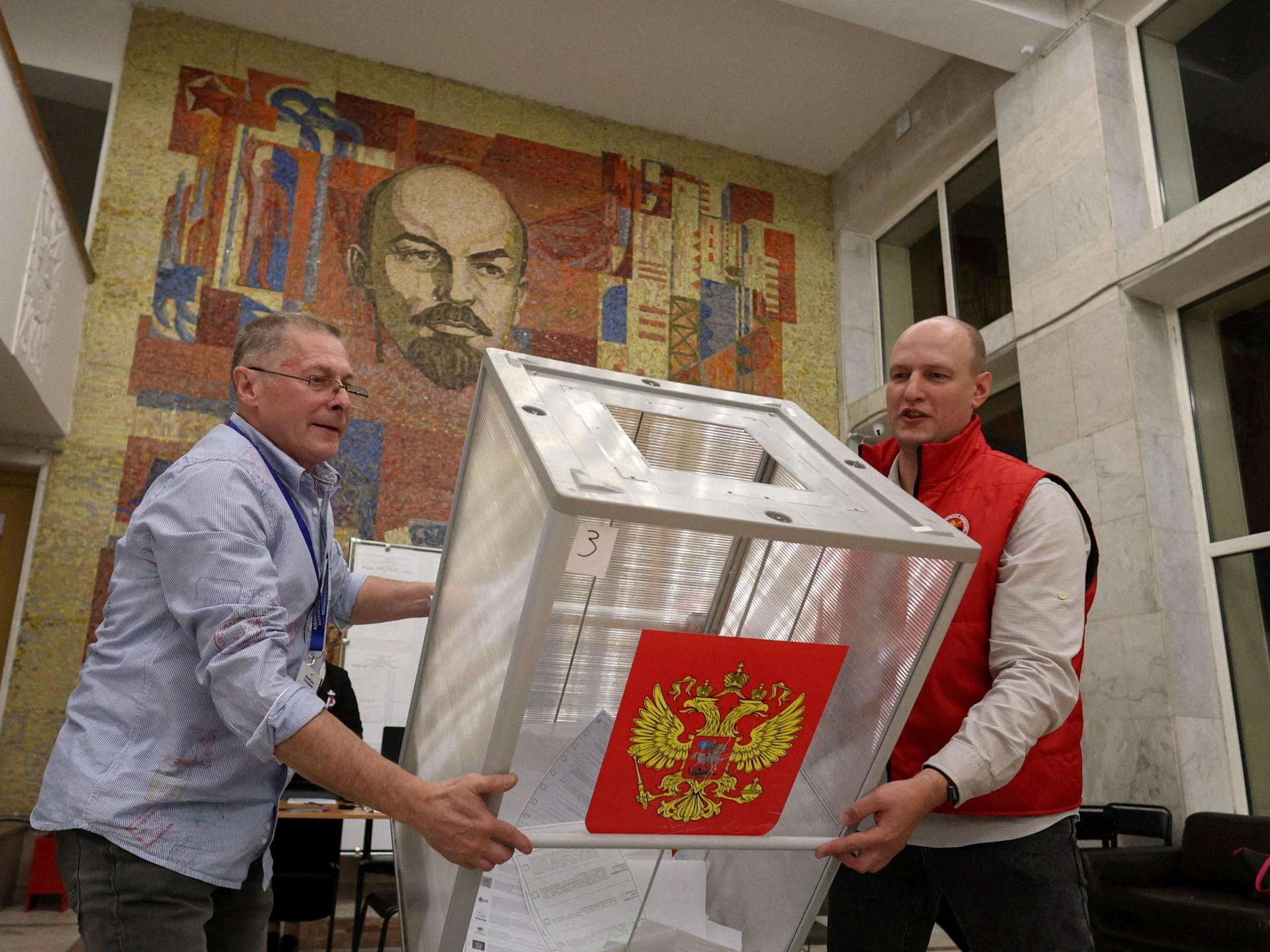
The Central Election Commission of Russia reported that voter turnout reached 56.66 percent as polling stations closed, while the ruling party secured nearly 58 percent of votes in single-mandate districts comprising 225 seats, with expectations of similar victories in most of the remaining 225 single-member districts.
These elections mark the first held since the full-scale invasion of Ukraine began in 2022 and included votes from approximately 111 million eligible voters, including residents of regions illegally annexed by Moscow such as Kherson, Odesa, and Crimea. However, Ukrainian authorities and the European Union have condemned the process as a flagrant violation of international law.
Russia's TASS agency warned that Ukraine's latest attack, involving hundreds of drones targeting Moscow and other areas, was the largest since the start of the war, resulting in three deaths near Moscow and two others in Russian-controlled Kherson, including an election official.
Authorities noted that voting systems and communication lines were targeted during the ballot period but confirmed that the electoral process remained largely smooth despite these ongoing security and cyber challenges.
The ruling party is expected to maintain its absolute dominance in the Duma, with pro-Putin "systemic opposition" parties continuing to participate, while the only liberal party, Yabloko, which officially criticized the war, was excluded from the candidate list a month ago.
Moscow also rejected invitations for observers from the Organization for Security and Co-operation in Europe (OSCE) to monitor the elections, characterizing the organization's criticism as reflecting "double standards," whereas the European Union called on foreign nations not to recognize voting results in occupied territories.
Analysis & context
Analysis & Context
From an analytical perspective, the Russian government is using these elections to solidify its political legitimacy amid a deteriorating economic situation and ongoing periodic attacks by Ukraine. Despite international pressure and harsh condemnation from the European Union describing the process as a "flagrant violation of international law," the Kremlin continues to control the media narrative to ensure its hold on power.
The Russian political landscape has become severely constrained, with the only liberal party, Yabloko, which was legally permitted to openly criticize the war, excluded from the candidate list by Russia's Supreme Court a month prior. Additionally, numerous anti-war politicians have been imprisoned or forced into exile before the campaign began, ensuring the continuation of the current regime's dominance without genuine competition.
In the broader context, these elections represent a test of Russia's ability to manage democratic processes under exceptional circumstances, while the country faces steep economic costs and an increase in attacks from within its own territory. In response, Russia denied OSCE observers access and accused the organization of "double standards" for its criticisms, reflecting the closure of both domestic and international political spaces surrounding the electoral process.