Sourced fact
The News
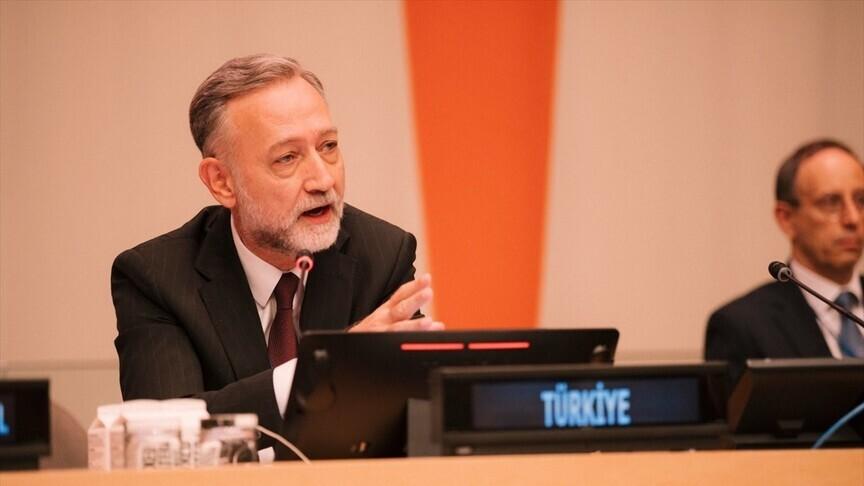
The United Nations Friends of the Alliance of Civilizations held a high-level meeting on Saturday in New York, attended by representatives from Turkey, Azerbaijan, Kazakhstan, Turkmenistan, and the International Turkish World Culture Organization (Turksat). Miguel Ángel Moratinos, the High Representative for the Alliance of Civilizations, chaired the meeting, which brought together diplomatic officials from the participating countries.
Ambassador Levend Gumrukcu, Deputy Foreign Minister of Turkey, clarified that cultural diversity should not be viewed as a threat but as a source of strength amidst rising global bias and extremism. Sultan Raif, Secretary-General of Turksat, emphasized that cultural diplomacy is not merely a complementary element of international relations but constitutes one of the powerful tools of preventive diplomacy.
Raif noted that every war destroys human lives in addition to city memories, sacred sites, and heritage accumulated over centuries. He pointed out that the human tragedy in Palestine reminds us once again that protecting human life and cultural heritage is a shared responsibility for all humanity.
Yalçın Raifyev, Deputy Foreign Minister of Azerbaijan, also underscored the importance of the seventh Global Forum on Cultural Dialogue, which will be held in Baku, Azerbaijan, from October 27 to 29. Yerzhan Ashikbayev, First Vice-Minister of Foreign Affairs of Kazakhstan, called for enhancing interfaith harmony and promoting a culture of peaceful coexistence.
At the conclusion of the meeting, Vepa Hajiyev, Turkmen Ambassador to the United Nations, highlighted the role of dialogue, mutual respect, and adherence to international law in preventing conflicts. Turkey and Turksat expressed their readiness to develop new projects including youth exchange programs, cultural dialogue initiatives, and joint heritage protection efforts.
Analysis & context
Analysis & Context
From an analytical perspective, this meeting highlights the growing role of non-governmental cultural organizations in addressing sensitive geopolitical issues such as conflicts, forced migration, and hatred. The focus on cultural heritage as a strategic element of international security reflects a shift in global diplomatic discourse toward integrating human and cultural dimensions at the core of peacebuilding and conflict prevention efforts.
In a broader context, this meeting represents a continuation of international efforts aimed at strengthening social cohesion amid modern challenges such as violent extremism and social polarization. The call by participants to protect the shared cultural heritage of the Turkic world and link it to universal human values points to an attempt to build a cultural bridge connecting local identities with unifying global values.
Furthermore, the announcement of the seventh Global Forum on Cultural Dialogue in Baku, Azerbaijan, at the end of October indicates ongoing practical work to transform theoretical principles into concrete programs. The participation of Turkic countries through Turksat reflects the importance of the Turkic region as a pivotal zone in global civilizational dialogue and the protection of shared human heritage.
Finally, the emphasis on the role of international law and mutual respect in preventing conflicts underscores the need for robust institutional mechanisms that support cooperation among member states of the Alliance of Civilizations. This meeting is not merely a routine diplomatic event but a step toward building a long-term strategic partnership to protect human heritage and promote global peace.