Sourced fact
The News
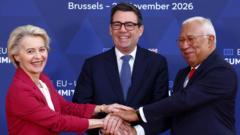
The United Kingdom and the European Union have agreed on a new deal that will come into force regardless of an agreement on student tuition fees, according to BBC News. The measures agreed upon in Brussels include removing most food export checks from Britain in exchange for the UK adhering to some EU regulations by 2028, as well as launching a new youth mobility scheme.
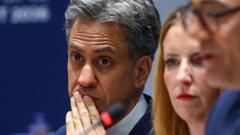
Foreign Secretary Ed Miliband stated that the agreement would apply even if an agreement on tuition fees paid by EU students in the UK was not reached. European Commission President Ursula von der Leyen added that she is confident in finding a solution to the problem, while Prime Minister Andrew Burnham said during a press conference that everyone is optimistic about the success of the deal.
Miliband clarified that agreements related to food exports, energy, and youth mobility would certainly be implemented despite the lack of an agreement on tuition fees. He noted that President von der Leyen made it clear in the press conference that these three agreements are separate from the issue of fees, which is included in a separate paper.
Miliband said that the British Treasury believes the deal could boost the UK economy by up to £17 billion annually, confirming there would be no additional cost for taxpayers in the UK. He also mentioned that the implementation dates for these measures are set for 2028 and their legislation will be introduced in Parliament to ensure their execution.
In contrast, Reform UK leader Kemi Badenoch criticized the deal, saying it is unfair because British farmers will be subject to Brussels rules while European youth will compete with British youth struggling to get local jobs. Reform UK leader Nigel Farage also accused the Prime Minister of deception, stating that today represents a betrayal of the British people and an attempt by the EU to humiliate the United Kingdom.
On his part, Liberal Democrat leader Sir Ed Davey said that the youth mobility scheme is a good step but not enough, calling for a new full agreement that works for Britain faster than just simple tweaks to the relationship with the EU.
Analysis & context
Analysis & Context
From an analytical perspective, this agreement represents an attempt to restore trust between London and Brussels after Brexit, focusing on specific areas such as agricultural trade and youth mobility without delving into deep financial disputes over university tuition fees that were a potential obstacle. Separating the tuition fee issue from the rest of the agreements is a smart diplomatic move that allows for the immediate implementation of economic benefits like removing customs checks on food, thereby boosting trade and reducing costs for British consumers and farmers.
In the broader context, the reaction of political opposition in Britain reflects concern about the impact of these deals on farmers and youth, where some leaders believe complying with EU regulations may harm local interests while others see continuous negotiation as the only way to improve relations with a changing Europe. The issue of rejoining the EU or adopting wider agreements remains an open topic on the table as Miliband confirmed, indicating a shift in British political rhetoric towards Europe after years of Brexit.