Sourced fact
The News
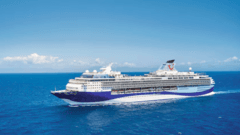
The U.S. Coast Guard announced the suspension of search and rescue operations for a 72-year-old British woman believed to have fallen into the waters of the Atlantic Ocean while the Tui cruise ship "Maraiva Fugner" was en route to the Caribbean. Search efforts, which included coordinated international assistance, were halted on Wednesday following an assessment of factors such as low probability of survival and a lack of sufficient search assets in the remote area.
The last sighting of the missing woman occurred around noon on Monday as she entered her cabin door, while ship staff discovered her absence on Tuesday after noting that her bed had not been touched. The Coast Guard estimates the ship was approximately 500 nautical miles from the presumed location of the incident at the time the initial disappearance report was received at 19:30 Eastern Time on Tuesday.
Tui, the cruise line operator, expressed deep sorrow over the loss of its passenger and offered condolences to her loved ones during these difficult times. The British Foreign Office also confirmed its support for the family of the missing British citizen and stated it is in contact with relevant authorities regarding the incident.
The Coast Guard explained that the ship does not have enough fuel to return to the search area and was therefore asked to continue its voyage rather than alter course to search for the woman. Several commercial vessels were contacted to join the operation, but none were in the required geographic area at the appropriate time.
The cruise ship carries approximately 2,000 passengers plus 800 crew members. It departed from Malta on November 4 and is expected to arrive in Antigua on Friday before visiting Dominica and reaching Barbados by Sunday. In a separate incident, a Royal Caribbean pianist who fell into the ocean was found floating near the California coast.
Analysis & context
Analysis & Context
From an analytical perspective, this incident highlights the immense logistical challenges faced during open-ocean search and rescue operations, particularly when a vessel is far from major ports and lacks sufficient fuel to return. Harsh weather conditions in the North Atlantic also play a critical role in determining the feasibility of continuing any search operation after a certain period has elapsed since the incident occurred.
In a broader context, incidents involving passengers falling off cruise ships are rare but catastrophic, with outcomes often depending on how quickly the situation is detected and whether maritime resources are available in the area. Previous reports on similar cases, such as the recovery of a pianist who fell from a ship off California, have underscored that surviving in open ocean waters without survival equipment for extended periods is nearly impossible.
The authorities' decision to suspend the search reflects their reliance on strict scientific criteria related to survival probabilities and available resources. This approach underscores the priority given to saving lives where there is a genuine chance of success, while avoiding the wastage of resources in areas that are difficult to reach or where chances of survival are effectively nonexistent.