Sourced fact
The News
Clashes intensified sharply in the Tigray region of Ethiopia on September 23, where Tigrayan forces seized control of three local airports and the conflict spread to neighboring areas of Afar and Amhara, threatening the peace agreement signed in 2022 in Pretoria. According to Deutsche Welle (DW), both sides accused each other of stoking this new escalation amidst a geopolitical environment that has changed radically since the end of the previous war.
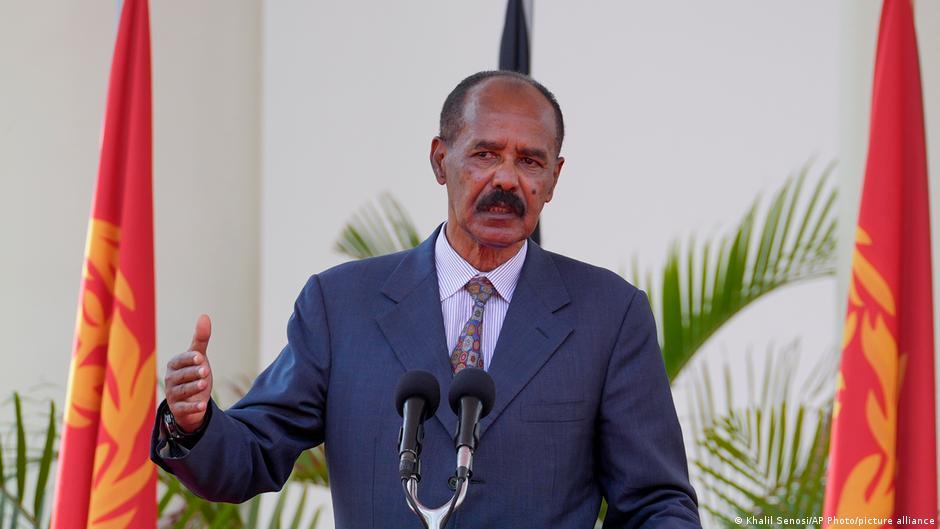
Eritrea's role emerges as a critical factor in the regional equation, especially with the US decision to lift sanctions against it days after the escalation of fighting in Tigray. British journalist Martin Plaut explained that the US administration under Donald Trump made a strategic calculation to persuade Eritrea to engage in securing the Red Sea against threats from Iran-backed militias such as the Houthis. He pointed out that this decision grants new political weight to an oppressive regime that holds increasing strategic importance amid deteriorating security around the Red Sea.
The lifting of US sanctions on Eritrean entities and prominent individuals on September 18 coincided with the announcement by a coalition of seven Ethiopian political and military groups on September 21 aiming to topple the current government. Although there is no public evidence that the sanctions decision was designed to provoke Eritrean military intervention, existing tensions could turn the Ethiopian conflict into a confrontation between states if fighting intensifies. President of Eritrea denied any formal agreement with Washington, while the Ethiopian government denied supporting Eritrea for armed groups in this new dispute.
Analysts fear that the situation could evolve into a full-scale regional confrontation due to intertwined alliances that may be dangerous; the UAE supports the Rapid Support Forces while Saudi Arabia backs the Sudanese Armed Forces and Eritrea. Researcher Musa Okello stated that the regional context has changed radically since 2020, where tensions in the Red Sea and the Middle East have added a new layer of complexity making maritime issues more difficult to address. Plaut emphasized that this interweaving of regional alliances carries risks of transforming a local conflict into a widespread regional fire that could disrupt the stability of the entire region.
Analysis & context
Analysis & Context
From an analytical perspective, this timing represents a precise intersection between internal developments in Ethiopia and broader regional geopolitical conditions. Analyst Abd al-Rahman Sayed pointed out that the ongoing war against Iran and the closure of the Strait of Hormuz and Bab el-Mandeb give Eritrea an advantage to establish relations with the US, especially as the region has become a competition arena among major powers.
In the broader context, the strategic equation has shifted since the previous Tigray war where the focus was on the internal conflict between TPLF and Ethiopian Defense Forces; today, the igniting of the Middle East makes Eritrea's coastline and Bab el-Mandeb passage vital corridors for global security. This radical shift in the regional context raises the value of cooperation or even non-enmity with Eritrea from a strategic standpoint for Washington.
This political and financial exchange carries its own risks, as Eritrea is one of the most authoritarian countries in the world without national elections since its independence in 1993; it is also an economically closed country, meaning that lifting sanctions may not make much difference on the ground despite its symbolic political significance. Furthermore, any new confrontation between Ethiopia and Eritrea will not occur in isolation from its surroundings, as Sudan remains at war, Somalia is unstable, and the Yemeni conflict is directly linked to the security of Bab el-Mandeb strait.
Analyses warn that regional alliances such as UAE support for the Rapid Support Forces and Saudi support for Eritrea and the Sudanese Armed Forces could interact in dangerous ways, potentially transforming the Ethiopian conflict into an international confrontation threatening the stability of the entire Red Sea.