Sourced fact
The News
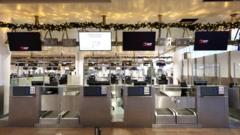
Hundreds of flights were grounded and train services were severely disrupted across Belgium as a general strike resists proposed government austerity plans. All flight operations at Zaventem Airport in the capital, Brussels, as well as Charleroi Airport, which hosts low-cost carriers like Ryanair, have been halted.
This strike comes amid Prime Minister Bart De Wever's failure to reach an agreement on a cost-cutting budget with his coalition partners, while King Philippe refused his resignation, granting De Wever additional time for negotiations. Meanwhile, metro trains and regular commuter trains in Brussels have stopped, with large numbers expected to join a protest march.
The strike carried out by air traffic controllers halted all flights between 07:00 and 21:00 local time at Brussels Airport, affecting the plans of over 50,000 travelers, with expectations of greater disruption during the night and the following day. The airport warned that without air traffic control, no aircraft can take off or land, citing catastrophic consequences.
Bert Englebert, head of one of the country's major unions, FGTB, stated that the government has alternatives to "dismantling the social protection system," calling for a real wealth tax and closing tax loopholes. Other union leaders criticized the government's plan to cut bank holidays falling on weekends, while public transport services and schools face similar disruptions.
Analysis & context
Analysis & Context
From an analytical perspective, this strike reflects the severe political tension currently facing Belgium due to the failure of the five-party coalition to agree on an austerity budget required by the European Union and the European Central Bank. The crisis highlights the government's significant challenge in balancing financial stability requirements with increasing social pressures from unions and citizens.
In a broader context, these events indicate a growing intensity of protests against austerity policies in Europe aimed at reducing fiscal deficits, sparking debate over whether maintaining public services and social protection should take priority over strict economic standards. Additionally, the King's intervention in refusing the prime minister's resignation reflects the traditional role of the Belgian monarchy in stabilizing the political system during constitutional or political crises.
The role of major labor unions such as FGTB and CSC in leading these protests underscores that the conflict is not only between the government and the opposition but also within the coalition itself, where some parties like "Forvoit" opposed harsh austerity measures. The economic and social consequences of these disruptions could be long-lasting if negotiations fail to resolve the financial and constitutional crisis quickly.