Sourced fact
The News
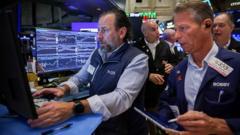
US and Asian stock markets lost hundreds of billions in market value during a sharp trading session following the victory of Democrats in the US midterms, which raised concerns about slowing AI development. The Nasdaq Composite Index, focused on the technology sector, fell by more than 5.5%, losing approximately $2.5 trillion in value, while other markets recorded significant declines in their worst days since 2025.
The victory of Democrats in both the Senate and House of Representatives, who carried campaign slogans to slow down the expansion of data centers and restrict their development, led to a crash in the shares of major tech companies that rely on this sector. Greg Brockman, CEO of OpenAI, said everyone was surprised by the public's reaction to AI infrastructure projects, emphasizing the need to listen to local communities before building in states like Texas and Georgia.
Asian markets experienced a sharp crash on Friday morning, with Japan's Nikkei Index falling 6% while Kioxia's memory chip shares dropped more than 12.6%. This decline in South Korea triggered a circuit breaker mechanism that temporarily halted trading to calm panic, with the Korean Kospi Index falling by more than 8.5%.
US President Donald Trump stated that financial markets lived through one of their worst historical days based on election results, blaming political opponents, the Democrats, who promised to stop building new data centers in their state. In contrast, Democratic Senator Bernie Sanders called for an immediate ban on building data centers, arguing that Americans do not want a monopoly by major tech companies that threatens the environment and humanity's future.
Shares of the "Magnificent Seven" companies, including Apple, Nvidia, and Tesla, were significantly affected, as these companies collectively lost a trillion dollars in value in just one trading session. Investment strategist Suzana Streeter said this harsh selling sends shockwaves to global markets, pointing to investor fears that huge investments in AI infrastructure may not yield expected returns.
Analysis & context
Analysis & Context
From an analytical perspective, this simultaneous crash in US and Asian markets reflects a fundamental shift in investor sentiment toward the AI sector following the Democrats' victory in controlling both the House and Senate. The broader context shows that concerns are no longer limited to financial performance alone but have extended to new regulatory and political risks that could hinder massive investment in AI infrastructure.
In the broader context, statements from company leaders like Greg Brockman from OpenAI indicate that the tech sector was completely unprepared for this sudden political backlash against data center projects. This points to a gap between the speed of technological development and the slowness of regulatory and community responses, creating a volatile environment for investors.
Furthermore, Meta's reaction, which called for doubling down on marketing AI as a good idea, highlights an urgent need to reshape the narrative around this technology to overcome environmental and social concerns it raises. This shift in discourse reflects increasing pressure on major companies to align their goals with new political trends in the US Congress.
Finally, investor anxiety over a potential bubble in AI stocks that may require correction stands out, especially with fears of failing to achieve expected returns intertwined with expectations of slowing data center construction. This scene reflects the complexity of the relationship between rapid technological development and the political and social dynamics surrounding it in the modern era.