Sourced fact
The News
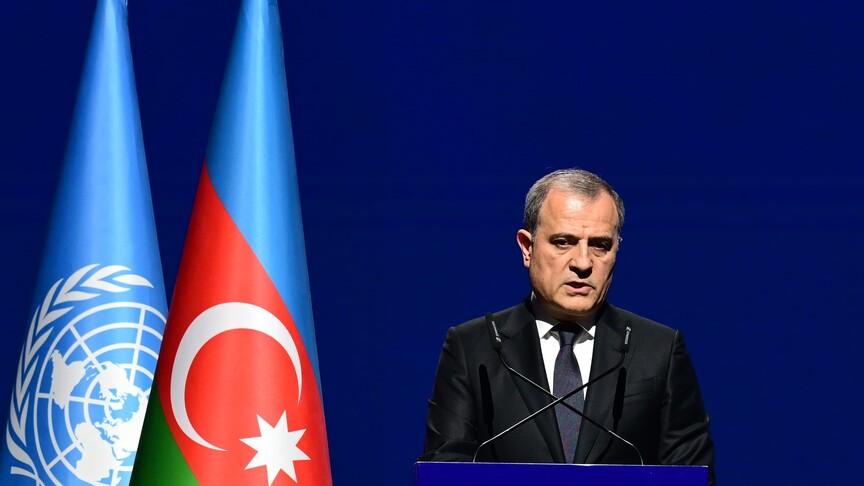
Azerbaijan's Foreign Minister Jeyhun Bayramov, during his participation in the 81st session of the UN General Assembly in New York, affirmed that the erosion of trust in multilateral institutions undermines the international community's ability to tackle both existing and emerging challenges and threats. According to Anadolu Agency, the Azerbaijani minister emphasized that reversing this trend requires joint action but clarified that genuine transformation cannot be achieved without restoring trust in the international system and demonstrating the multipolar world's capacity once again to deliver tangible results for all.
Bayramov called for revitalizing a multilateral system conducive to reform, stating it must be based on strict adherence to consistently and non-selectively applying universally accepted international legal rules and principles. He also urged fundamental reforms in the UN Security Council to make it more representative, effective, and capable of responding quickly to challenges, considering such reform essential to ensure the continued efficient operation of the international organization.
In the context of regional relations, the Azerbaijani Foreign Minister noted that Azerbaijan has chosen to look toward the future and turn the page on hostilities with Armenia, offering full peace consistent with principles of international law based on mutual recognition, respect for sovereignty, and the territorial integrity of both parties. Bayramov highlighted the Washington summit last August, attended by US President Donald Trump, where the leaders of both countries signed a joint declaration achieving "de facto peace," including lifting traffic restrictions and organizing regular oil supplies from Baku to Yerevan.
Regarding reconstruction in previously occupied territories, the minister reported that construction of smart energy-green cities and villages is currently underway but warned that contamination of these areas with landmines and other explosive devices remains a serious obstacle to progress. He also affirmed that resolving the fate of nearly 4,000 missing Azerbaijanis is essential for ensuring accountability and victims' rights and those of their families, considering this an integral part of comprehensive peace processes.
Analysis & context
Analysis & Context
Analytically, Azerbaijan's call for UN system reform comes at a time when international institutions face increasing pressure due to their inability to effectively address global crises, prompting many countries to seek alternatives or strengthen bilateral and regional working mechanisms. Minister Jeyhun Bayramov points to the new model of relations with Armenia as a model example for restoring trust, reflecting a strategic shift in Azerbaijan's foreign policy that favors practical and legal solutions over traditional diplomatic confrontations.
In a broader context, reforming the UN Security Council remains a sensitive and long-debated issue among member states, as many political systems seek to increase their global representation and adjust international decision-making structures to be more fair and inclusive. Furthermore, the reference to "de facto peace" with Armenia opens a new chapter in the geopolitics of the Caucasus region, where normalizing relations between Baku and Yerevan could alter regional stability dynamics and impact major powers' policies in the area.
Regarding reconstruction challenges in devastated territories, the focus on green technology and smart cities reflects global trends toward environmental sustainability and infrastructure innovation, while the presence of landmines remains a humanitarian and ethical challenge requiring international cooperation and UN leadership to clean these areas. Additionally, the issue of missing persons highlights the importance of transitional justice and human rights as fundamental pillars for any successful and sustainable peace process in international conflicts.