Sourced fact
The News
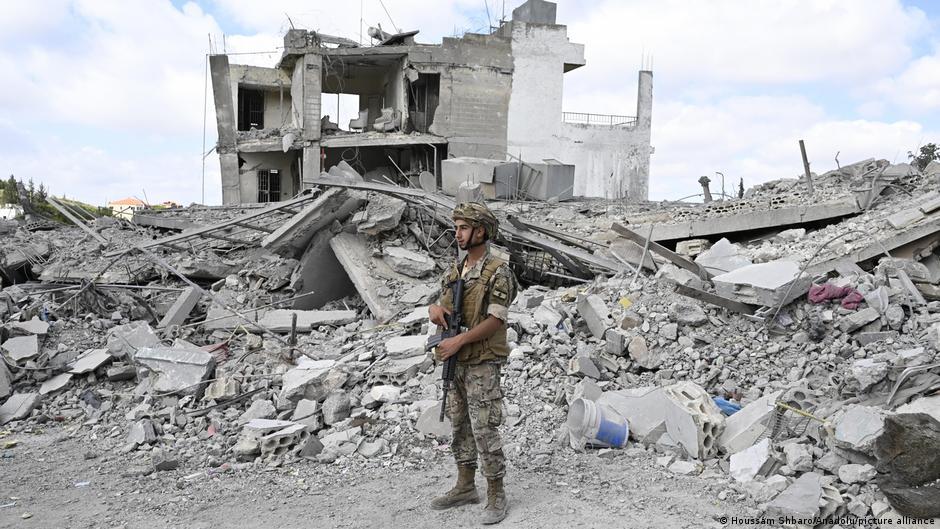
According to Deutsche Welle, the Israeli army has handed over so-called "model zones" to Lebanon, with the aim of facilitating an end to fighting between Hezbollah and Israel and the Israeli occupation. However, residents and experts are skeptical about this agreement.
Analysis & context
Analysis & Context
Politically, this development represents a result of years of conflict between Israel and Hezbollah in Lebanon, which has led to widespread regional intervention, with Russia at its head. These “model zones” are an attempt to find a compromise solution, taking into account Israeli concerns regarding Hezbollah’s military activities, while simultaneously Lebanon seeks the end of the Israeli occupation and de-escalation of tensions. Historically, Lebanon has witnessed numerous conflicts between various Lebanese factions and their regional allies, making this agreement a major challenge requiring mutual trust and commitment to settlements.
In the broader context, this decision can be understood in light of recent geopolitical developments in the Middle East, where the region is witnessing significant shifts in power balances and multiple external interventions. Israel is facing increasing security pressures due to Hezbollah’s activity, while Lebanon faces deep economic and social challenges requiring radical solutions.
It is important to note that the doubts expressed by residents and experts do not necessarily mean the failure of the agreement, but rather reflect their caution about historical conflicts repeating themselves and the inability to achieve permanent settlements.