
Sourced fact
The News
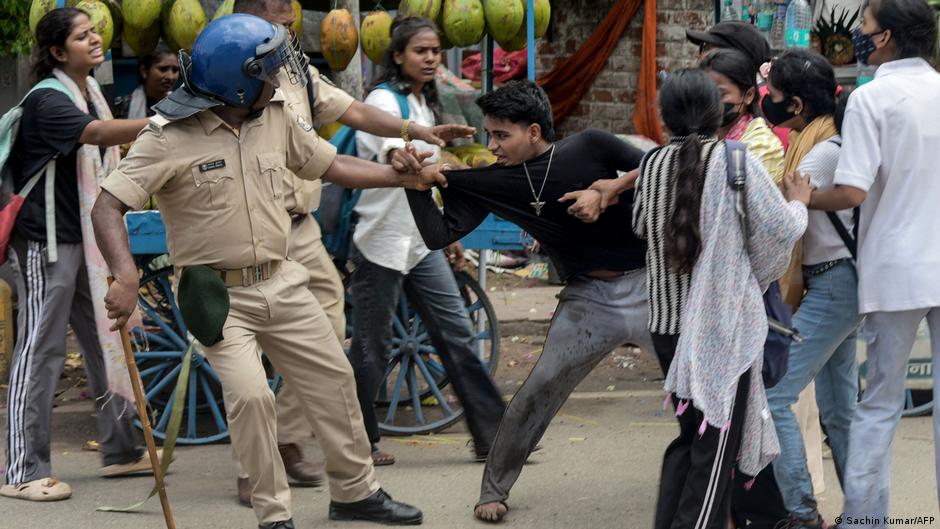
According to France 24, the Indian Minister of Education resigned, considering it a "joyful" moment for Indian youth demanding accountability, coinciding with the issuance of new laws to combat cheating and the formation of a reform committee.
Analysis & context
Analysis & Context
From a political perspective, this resignation can be understood as an implicit response to increasing pressure from Indian youth who see it as a challenge to the current government led by Narendra Modi. India has historically been a country with long-standing traditions in democracy and freedom of expression; however, there is a growing sense among young people regarding concerns about the direction of the government in recent years, particularly concerning policies that are viewed as repressive or raise doubts about freedom of speech. The demand for accountability goes beyond a simple political stance, but also reflects a deeper concern about the future of the country and its development.
In a broader context, this event points to a wider global trend towards youth participation in politics and civil society. We see this in many countries around the world, where young people are playing an increasingly important role in demanding social and political change. The shift from “digital dissent” – which relies on social media – to “real collective action” represents a qualitative leap in methods of political struggle, indicating that Indian youth is no longer satisfied with simply expressing their opinions online.
From an institutional perspective, the speaker focuses on the fact that government actions – such as increasing penalties or making administrative reshuffles – do not address the underlying problems in the Indian education system, which include technological infrastructure deficiencies and a lack of democratic participation. This reflects a widespread view that genuine reform requires a real structural change rather than merely superficial adjustments.
More significantly, Gawande portrays the movement as signalling a wider political transformation: a generation that has moved beyond digital dissent into physical collective action, increasingly resistant to w